Loading...
Serving San Rafael, CA and surrounding areas. (628) 277-0007
Cracks, faded lines, and rough pavement cost you customers and create liability - get them fixed before the Bay Area rainy season makes it worse.
Cracks, faded lines, and rough pavement cost you customers and create liability - get them fixed before the Bay Area rainy season makes it worse.
Parking lot maintenance in San Rafael covers crack filling, sealcoating, pothole patching, and re-striping - services that protect the surface you have and extend its useful life, most jobs completed in a single day for a typical small commercial or residential lot.
A parking lot does not fail all at once. It starts with surface cracks that let water in, then potholes form as the base softens, and eventually the whole surface needs replacing. Regular maintenance in San Rafael - timed to the dry season before winter rains - breaks that cycle and keeps your costs predictable. Property owners who stay on a maintenance schedule spend a fraction of what reactive repair costs. Many lots also benefit from asphalt resurfacing when the surface has aged past what crack filling and sealing can address.
The practical maintenance window in the Bay Area runs roughly from May through October, when the pavement is dry and weather forecasts are reliable enough to plan sealing and curing. Scheduling early in that window gives you the most flexibility before the fall rush.
Fresh asphalt is dark and slightly flexible. When San Rafael's steady UV exposure depletes the binder, the surface turns gray, feels coarse underfoot, and becomes brittle. A gray, weathered surface is past the point where sealing alone helps - it needs crack work first.
Hairline cracks and alligator-pattern cracking are early warnings that water is working its way into the base. After a Marin winter, new cracks that were not there before the rains are a clear call to action. Addressing them before the next rainy season costs far less than repairing the potholes that follow.
A pothole means the base layer has already been compromised and the surface has broken through. Low spots that collect standing water after rain signal that drainage or base issues are developing. Both accelerate deterioration quickly, especially heading into the wet season.
When stall lines, fire lane markings, or accessible parking spaces become difficult to read, it creates safety hazards and potential liability. Faded markings are also a sign the surface has aged and is due for a full maintenance cycle - sealcoat and re-stripe together.
Most parking lot maintenance programs combine crack filling, sealcoating, and re-striping into a single visit. Crack filling is the first priority - sealing over unfilled cracks traps moisture and leads to premature failure. Sealcoating goes on once the surface is clean and repairs are complete, protecting the asphalt from the steady UV oxidation that is the main pavement enemy in Marin County. For lots where surface damage has gone too far for sealing to help, asphalt resurfacing is the next step - a fresh layer over the existing base at a fraction of the cost of full replacement.
Re-striping completes the maintenance cycle after the sealcoat cures, restoring clear lines for stalls, fire lanes, and accessible parking spaces. For lots that benefit from a protective sealcoat as a standalone service between full maintenance cycles, asphalt sealcoating can be scheduled independently to shield the surface from UV rays and fluid drips.
Best for lots showing early surface cracking - stops water from reaching the base before winter rains arrive.
Ideal for oxidized, faded surfaces in San Rafael's sunny climate - slows UV breakdown and seals out oil and moisture.
Suits lots where base damage has already broken through the surface - proper cut-and-fill repairs that hold.
For lots with faded stall lines, fire lane markings, or accessible parking spaces that are hard to read or out of spec.
San Rafael sits in Marin County with a Mediterranean climate - strong sun through a long dry season, then sustained winter rains that run from November through March. The UV intensity here is the primary force breaking down parking lot asphalt day after day, oxidizing the binder and turning surfaces gray and brittle faster than freeze-thaw cycles would in colder climates. That makes sealcoating particularly valuable in this area - it is a direct shield against the sun that is always working on your pavement. The rainy season creates its own urgency: any cracks left open before November become pathways for water to reach the base, and by spring you can have potholes where there were hairline cracks in October. Property owners in Novato and Corte Madera deal with the same seasonal pattern, and timing maintenance before the rains is the single most effective thing you can do to protect a lot in this climate.
Marin County also has varied terrain, and many parking lots in the area sit on soils with significant clay content that swells when wet and shrinks when dry. That seasonal movement stresses the pavement base and creates cracking patterns that are more about ground movement than traffic load. Lots that also collect standing water after winter rains need drainage assessment alongside surface repairs - a good contractor will look at both during the estimate so the maintenance work addresses the actual cause, not just the symptom.
We visit your lot in person, walk every section, and note cracks, potholes, drainage issues, and faded markings. We reply within 1 business day to schedule - no quotes over the phone for a job that depends on what we find on site.
You receive a written proposal that breaks down exactly what work is recommended and the cost. We schedule the job during a dry stretch - typically late spring through early fall - when conditions are right for sealcoating and crack filling to cure properly.
On work day, the crew cleans the entire surface, treats oil spots, routes and fills cracks, and patches potholes before any sealer is applied. This preparation is the most important part - shortcuts here are why lots fail within a season.
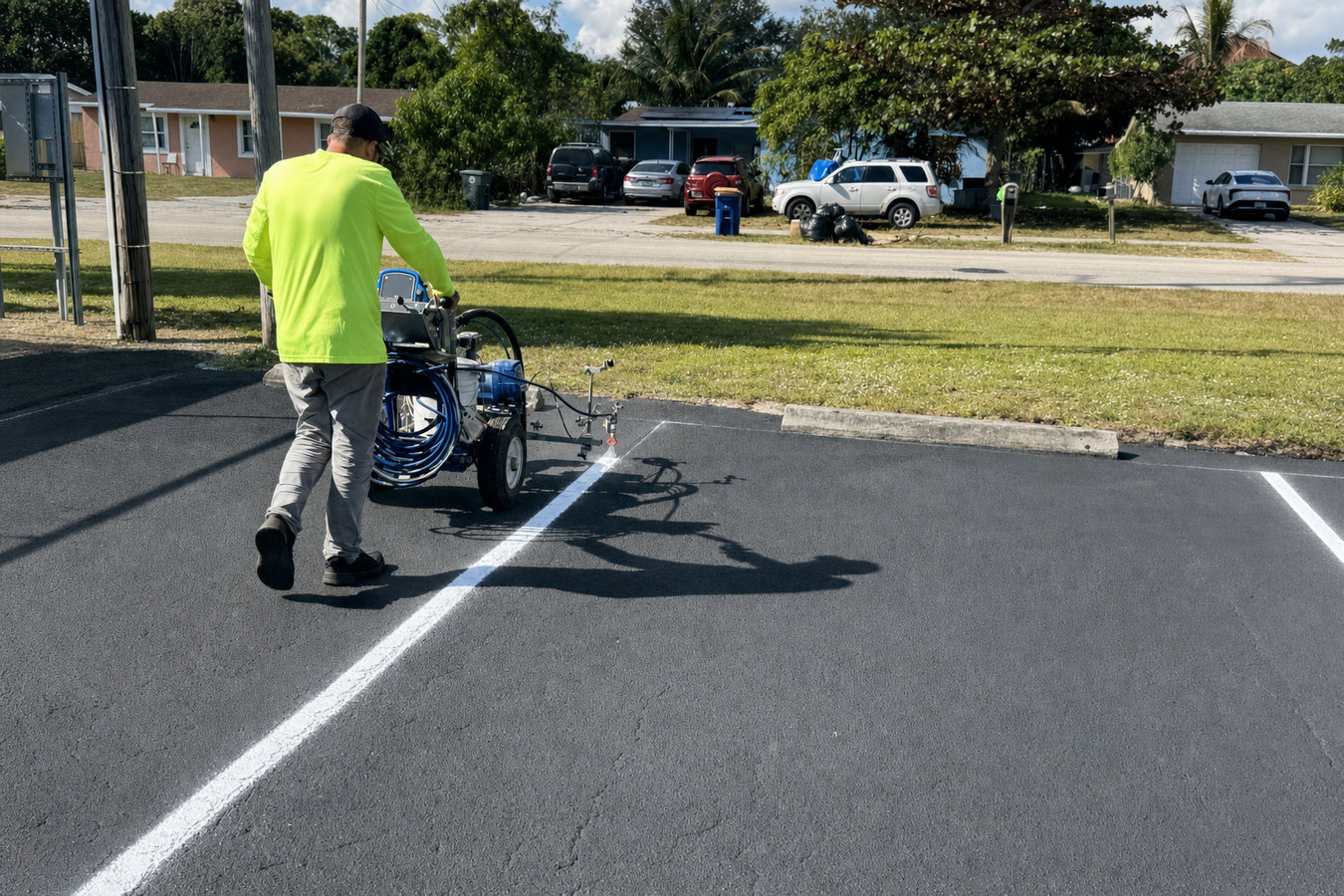
Sealer is applied in one or two passes and the lot stays closed for at least 24 hours to cure. Once fully cured, we return to re-stripe all lines, including accessible spaces and fire lane markings, and walk the finished lot with you before we close out.
Free on-site estimate - no pressure, no guesswork. We walk your lot, assess every crack and drainage issue, and give you a clear written quote.
(628) 277-0007San Rafael's rainy season runs November through March, and sealcoating on wet or damp pavement fails quickly. We schedule around the Bay Area's weather window by default - you do not need to track forecasts or worry about timing the job yourself.
Oil and fluid drips are common in any parking lot, and they prevent sealcoat from bonding if not treated first. We spot-prime contaminated areas before applying sealer - skipping this step is the most common reason a sealcoat peels within a season.
California has specific requirements for accessible parking space dimensions, quantities, and connecting pathways. When we re-stripe after sealcoating, we flag any spaces that are out of spec so you can address them proactively - not after a complaint.
Affiliation with the National Asphalt Pavement Association means we follow current industry standards for materials and workmanship - the same standards that separate work that holds up from work that fails within a season.
Parking lot maintenance is not complicated work, but the preparation steps that most crews skip are exactly what determines whether the job holds up through a Marin winter. We do those steps every time, because cutting corners on a sealcoat job costs you - not us - when the surface fails in the spring.
When surface damage is too widespread for crack filling alone, resurfacing adds a fresh asphalt layer over the existing base.
Learn MoreA standalone sealcoat protects your lot from UV oxidation and fluid drips between full maintenance cycles.
Learn MoreThe dry-season window is limited - lock in your date before the fall rains return to Marin County.