Loading...
Serving San Rafael, CA and surrounding areas. (628) 277-0007
Small cracks become big repairs after every rainy season - get them sealed now with proper prep and commercial-grade rubberized sealant.
Small cracks become big repairs after every rainy season - get them sealed now with proper prep and commercial-grade rubberized sealant.
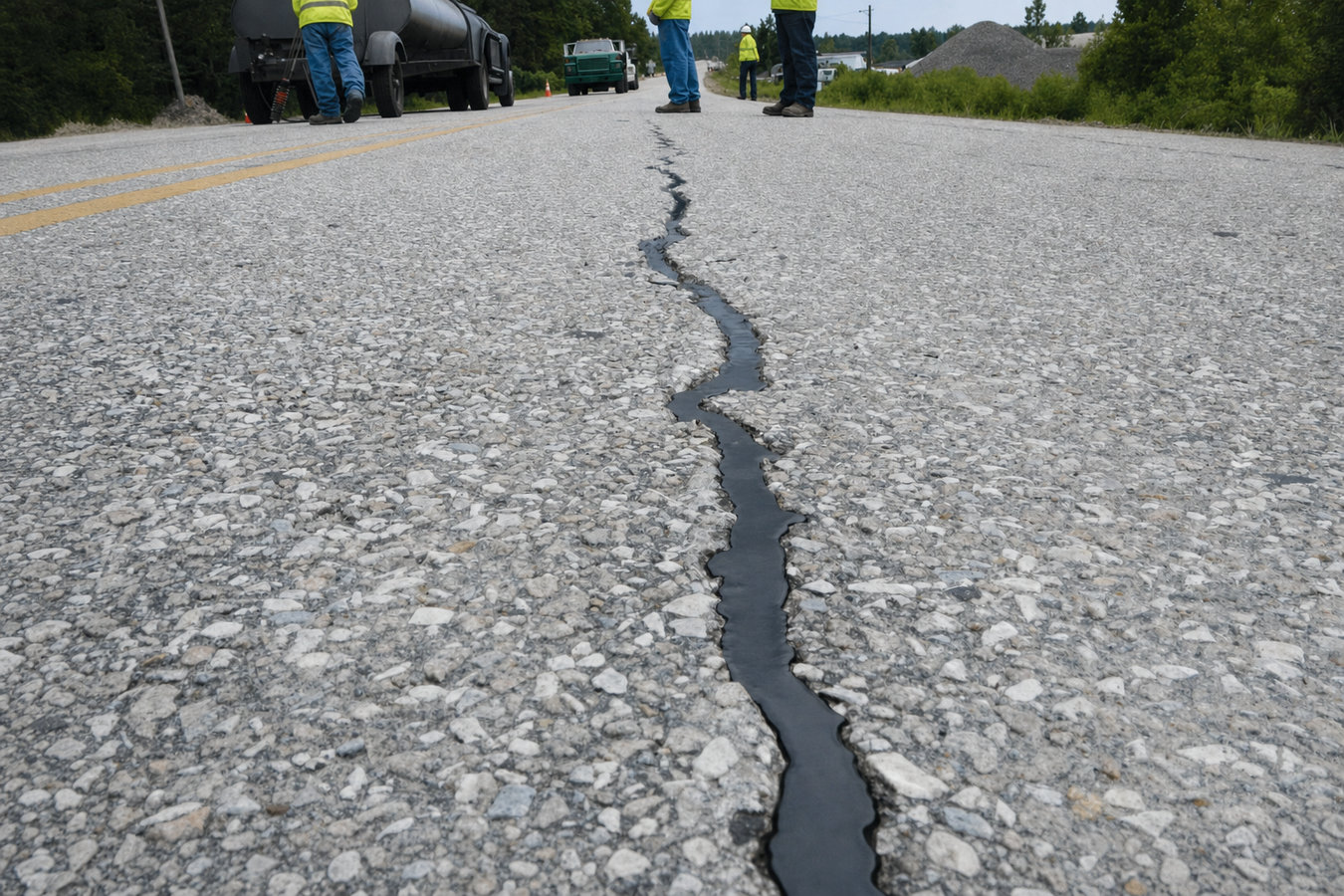
Asphalt crack sealing in San Rafael cleans out existing cracks and fills them with a flexible rubberized material that bonds to both sides of the crack, stopping water and debris from getting in - most residential driveways are sealed and drivable in a single visit of a few hours.
This is a protective repair, not a cosmetic one. Every unsealed crack in San Rafael is an open door for the rainy season. Once water gets below the surface, it softens the base material, and a hairline crack can grow into a pothole or a section needing full replacement by spring. Catching cracks early is almost always far less expensive than waiting - and pairing crack sealing with asphalt sealcoating gives the entire surface a uniform protective layer.
If your cracks have moved beyond sealing - crumbling edges, a spiderweb pattern across a large area, or sections that have shifted - that is a different conversation. We will tell you honestly when we come out whether sealing is the right call or whether you need more.
If a crack that looked minor last fall is noticeably wider now, the wet-dry cycle worked its way in over the rainy season. This is the main pattern in San Rafael - soil swelling in winter opens cracks wider each year. Sealing before the next November is the most effective thing you can do to stop the progression.
When plants root inside a crack, their growth pries the opening wider with every season. San Rafael's mild climate lets vegetation establish in cracks year-round. If you see green growth coming up through your driveway, the crack has been open long enough that immediate sealing is overdue.
Water sitting in or along a crack after a storm means moisture is working into the base rather than draining away. A saturated base softens over time, and the surface above it begins to sink or crumble. Catching this while it is still a sealing job - not a patching job - saves real money.
On sloped driveways common in San Rafael neighborhoods, cracks form first at the edges and low points where water collects. These locations get the most moisture exposure. A line of cracking running along the edge of your driveway is a clear sign sealing is overdue.
Our crack sealing work covers the full range of residential driveway situations in San Rafael - from standard flat driveways to the hillside and sloped lots that make up a big part of this city. For straightforward driveways with moderate cracking, the job is clean, fast, and ready to drive on the same day. For hillside driveways where edge cracks and drainage patterns create extra complexity, we pay attention to those low points and edges that collect the most water. Many homeowners also schedule crack sealing as prep work before a full asphalt sealcoating application, so the topcoat bonds to a clean, sealed surface and lasts longer.
For properties with more significant paving needs - a parking area, access road, or a driveway that has progressed past sealing into full replacement territory - we also offer commercial asphalt paving services. When you call, we can help you figure out which service actually fits your situation.
Suited to single-family driveways with hairline to moderate cracks - completed in one visit with same-day use.
For sloped lots where edge cracks and drainage patterns need extra attention before sealant is applied.
Sealing cracks before a full sealcoat application so the topcoat bonds to a clean, sealed surface and lasts longer.
Scheduled annual or biannual sealing for homeowners who want to stay ahead of crack damage rather than react to it.
The primary crack driver in San Rafael is not freeze-thaw like you see in colder climates - it is the wet-dry cycle of Marin County. Rain arrives in November and continues through March or April, and then the ground dries out completely over the summer. That expansion and contraction puts constant stress on asphalt from below. Clay-heavy soils across Marin amplify the movement, swelling noticeably when wet and shrinking when dry. Every cycle widens existing cracks and opens new ones. Sealing cracks in late summer - before the November rains - closes those entry points at exactly the right moment. Homeowners in San Anselmo and Fairfax face the same clay soil and seasonal conditions that affect San Rafael driveways.
San Rafael also has older neighborhoods with mature trees - oaks, bay laurels, and others - whose roots grow toward moisture under driveways and pry cracks open from below. On hillside lots, drainage patterns matter too: water that runs across a driveway rather than away from it concentrates along edges and low points, exactly where cracks form fastest. These are local realities that a contractor who works here regularly understands well. The National Asphalt Pavement Association recommends proactive crack maintenance as the most cost-effective way to extend pavement life in climates with significant moisture variation.
Call or message us to describe what you are seeing. We come out to walk the driveway and give you an accurate quote - crack sealing estimates depend on the total length and condition of the cracks. We reply within 1 business day to set up a visit.
We schedule the work during a dry stretch when pavement temperature is appropriate. The crew confirms the forecast before showing up - wet or damp pavement prevents the sealant from bonding correctly. Just make sure vehicles are moved before the crew arrives.
Using a blower or wire brush, the crew removes all dirt, debris, and vegetation from each crack before any sealant goes in. This is the most important step - sealant applied over debris will fail within a season. We take the time to do this right.
We inject heated rubberized sealant into each crack, slightly overfill, and level it flush with the surface. We walk the finished driveway with you before leaving. Most driveways are drivable the same day, a few hours after work ends.
Free estimate, no pressure. We reply within 1 business day.
(628) 277-0007San Rafael's expansive clay soils are the primary reason driveways crack here - not freeze-thaw as in colder climates. We understand this local dynamic and schedule sealing around the late-summer window that gives sealant the best chance to hold through Marin winters.
Good crack sealing starts with thorough cleaning. We blow out or brush each crack completely before any material goes in. A contractor who skips this step saves ten minutes and gives you a seal that pops out after the first cold night.
We use commercial-grade hot-pour rubberized sealant, not the cold-pour products available at hardware stores. The difference in flexibility and adhesion is significant, especially on driveways that move with clay soils. The National Asphalt Pavement Association sets standards for these materials.
National Asphalt Pavement AssociationCalifornia requires paving contractors to hold a state-issued license. You can verify any contractor's status through the Contractors State License Board before signing anything - ask for the license number and check it yourself.
Contractors State License BoardKnowing the local soil, seasonal timing, and how to prep a crack correctly is what separates a seal that holds for years from one that pops out after the first cold night. Every job we do here is backed by a state contractor license you can look up yourself.
When a surface needs more than sealing - full commercial paving for parking lots and access roads across San Rafael.
Learn MoreFollow up crack sealing with a protective sealcoat to give the entire surface a uniform, fresh appearance.
Learn MoreSan Rafael driveways take a beating from clay soils and seasonal rains. Seal the cracks now while the pavement is dry and the schedule is open.